EV Engineering Course in Pune | Nustech Academy
Fill out the form below to start a conversation with us on WhatsApp. Nustech Academy delivers practical training through its EV Engineering Course in Pune. Our course is designed for students, engineers, diploma holders, and automotive professionals who want practical knowledge of electric vehicle systems and modern automotive technologies.
Through our EV Engineering Course in Pune, we cover engineering fundamentals, components, design concepts, electrical systems, battery technologies, powertrain, electronics, charging, and embedded systems used in electric vehicles.
With our industry-oriented learning and practical exposure, we help learners build skills that can support their transition into the rapidly developing electric mobility sector. We structure the EV Engineering Course to connect classroom concepts with real engineering applications and workplace requirements.
Ready to Start Your Career?
Contact us to learn about upcoming batches, course duration, fees, certification, and enrollment details. Start your journey toward a successful career in automotive wiring harness design and electrical engineering.
What You Will Learn in an EV Engineering Course?
Our Electric Vehicle Engineering Course provides a structured understanding of the technologies, components, and engineering systems that form the foundation of modern electric vehicles. We focus on practical concepts that help learners understand how different EV systems work together.
- EV Fundamentals: Learn EV architecture, vehicle configurations, operating principles, energy flow, and the key differences between conventional and electric vehicles.
- EV Technology: Our Electric Vehicle Technology Course introduces major vehicle technologies, system integration concepts, and the role of different components within an EV.
- Automotive Systems: The EV Automotive Engineering Course covers the relationship between mechanical systems, electric propulsion, vehicle controls, and other automotive technologies.
- Vehicle Development: Through an Electric Vehicle Development Course, learners understand the major engineering stages involved in developing, integrating, and improving modern EV platforms.
- EV Design: The EV Design Engineering Course introduces fundamental approaches to vehicle architecture, component selection, system configuration, and engineering design considerations.
EV Engineering Course Modules
Our course modules are arranged progressively to help learners move from fundamental EV concepts to advanced vehicle systems. Each module focuses on an important area of electric vehicle engineering and its practical application.
- Electric Vehicle Architecture: Understand complete EV architecture, including major components, vehicle layouts, energy flow, electrical connections, and interactions between mechanical and electrical systems.
- EV Powertrain: The EV Powertrain Engineering Course covers electric propulsion architecture, drivetrain components, power transmission, motor integration, and important performance considerations.
- EV Battery Systems: The EV Battery Engineering Course introduces battery cells, modules, packs, battery characteristics, charging principles, thermal considerations, and essential battery safety concepts.
- Battery Management System: Our EV BMS Engineering Course explains the functions of a Battery Management System, including cell monitoring, balancing, temperature monitoring, protection mechanisms, and battery-state estimation.
- Electric Motors: The EV Motor Engineering Course introduces traction motor technologies, operating principles, motor characteristics, performance requirements, and their applications in electric vehicle propulsion.
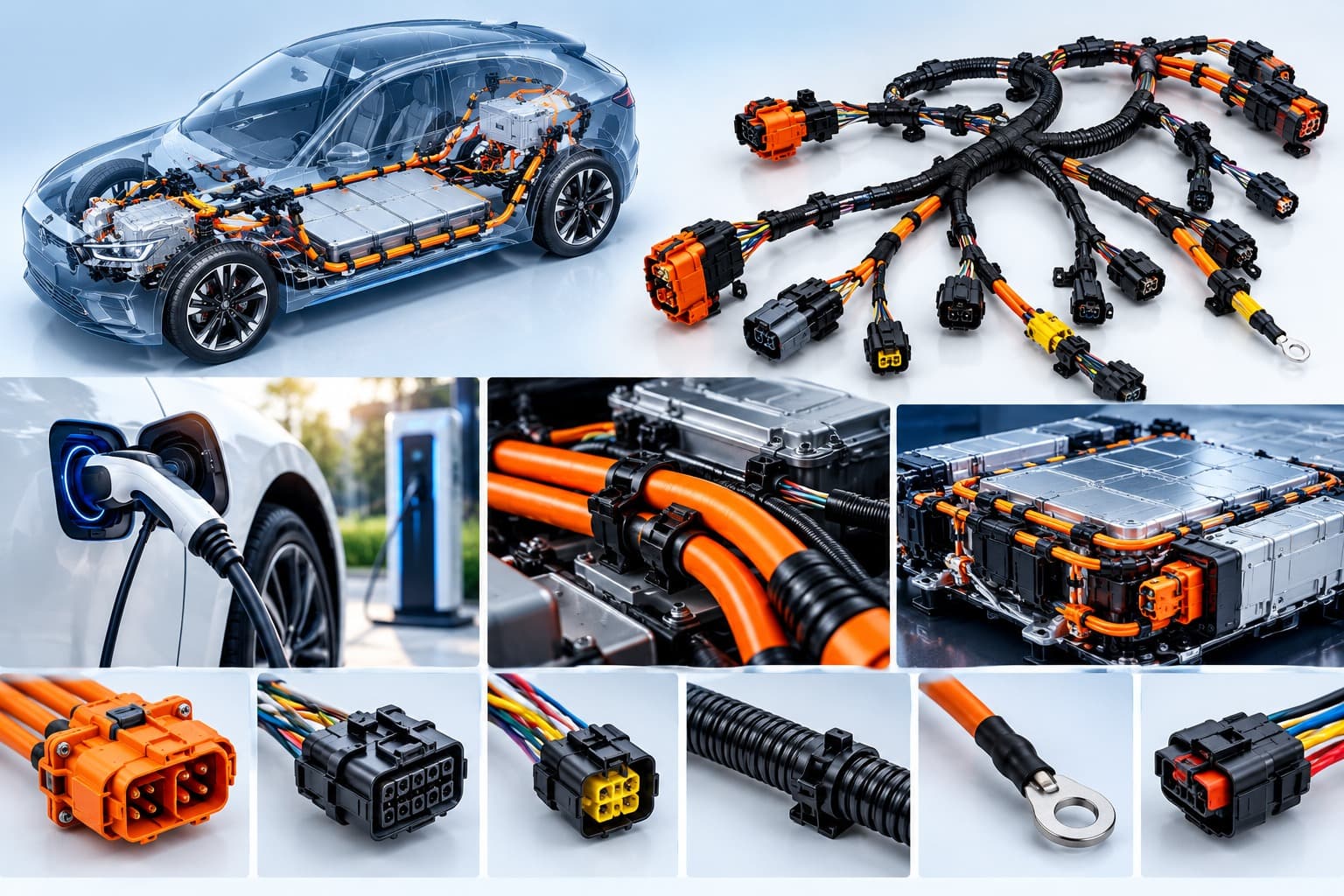
- Electrical Systems: The EV Electrical Engineering Course develops an understanding of EV electrical architecture, wiring, power distribution, connectors, protection systems, and high-voltage vehicle circuits.
- Automotive Electronics: The Electric Vehicle Electronics Engineering Course covers sensors, electronic control units, communication interfaces, control electronics, and electronic systems used across modern EV platforms.
- Inverter and Controller Technology: The Electric Vehicle Inverter Course introduces inverter functions, DC-to-AC power conversion, switching concepts, motor control fundamentals, and the role of inverters in electric propulsion.
- Embedded Systems: The Electric Vehicle Embedded Systems Course focuses on embedded controllers, automotive communication, sensors, control logic, electronic interfaces, and software-hardware interaction within EV systems.
- EV Charging: The Electric Vehicle Charging Engineering Course covers charging fundamentals, charging systems, charging methods, safety considerations, and the basic operation of EV charging infrastructure.
Practical EV Engineering Training
Our EV Engineering Training focuses on helping learners understand how individual components operate as part of a complete electric vehicle. Rather than studying systems in isolation, we connect technical concepts to practical EV applications and system-level functionality.
Practical Learning Areas
- Component Identification: Understand the purpose, functions, specifications, and applications of key EV components and assemblies.
- System Analysis: Study how batteries, motors, controllers, inverters, chargers, sensors, and electronic systems communicate and operate together.
- Technical Problem-Solving: Develop the ability to understand common engineering challenges, analyze system requirements, and identify suitable technical solutions.
- Application-Based Learning: Connect engineering principles with practical electric mobility applications to develop a stronger understanding of real-world EV systems.
- System-Level Understanding: Learn how individual electrical, electronic, mechanical, and control components contribute to overall vehicle performance and functionality.
Our training approach is designed to help learners build practical technical confidence while developing an integrated understanding of electric vehicle engineering and its applications across the automotive industry.
Who Can Join This Course?
Our EV training program is suitable for learners from diverse educational and engineering backgrounds who want to develop specialized knowledge of electric vehicle technologies. Whether you are beginning your technical education or looking to upgrade your existing engineering skills, the course provides a structured pathway to understand modern EV systems.
- EV Engineering Course After 12th: Suitable for students who want to start their technical learning journey and develop a foundation in electric vehicle engineering.
- EV Engineering Course After Diploma: Designed to help diploma holders expand their technical knowledge with specialized learning in EV components, systems, and applications.
- EV Engineering Course After Engineering: Engineers from relevant technical disciplines can build specialized EV knowledge and complement their existing engineering capabilities.
- EV Engineering Course for Mechanical Engineers: Helps mechanical engineers understand electric propulsion, battery systems, vehicle electronics, and the integration of electrical technologies with mechanical systems.
- EV Engineering Course for Electrical Engineers: Enables electrical engineers to explore automotive applications involving power systems, electric motors, power electronics, controls, and vehicle electrical architecture.
- EV Engineering Course for Automobile Engineers: Helps automobile engineering professionals develop knowledge of electric powertrains, EV architecture, battery technologies, and next-generation automotive systems.
Online EV Engineering Learning Options
Our Online EV Engineering Course provides flexible learning for students, engineers, and working professionals who want to build practical knowledge of electric vehicle technologies while managing their existing schedules.
With EV Engineering Training Online and Electric Vehicle Engineering Training Online, learners can develop specialized knowledge across key EV engineering areas through structured and accessible learning.
Online Specialization Areas
- EV BMS Engineering Course: Learn battery monitoring, cell balancing, protection, and essential BMS functions.
- Electric Vehicle Motor Engineering Course: Understand traction motors, operating principles, motor characteristics, and EV propulsion applications.
- Electric Vehicle Electrical Engineering Course: Explore EV electrical architecture, high-voltage systems, wiring, power distribution, and protection.
- EV Embedded Systems Course: Learn embedded controllers, sensors, communication systems, control logic, and hardware-software interaction.
- EV Controller Engineering Course: Understand vehicle controllers, system coordination, control functions, and communication between EV subsystems.
These flexible learning options help learners strengthen their EV engineering knowledge and develop relevant technical skills for the evolving electric mobility industry.
Certification and Career Development
Our certification program helps learners demonstrate their knowledge and completion of specialized training in electric vehicle technologies. An EV Engineering Certification can add value to a candidate’s professional profile when applying for relevant roles in the automotive and electric mobility sectors.
For learners who prefer flexible study options, online certification provides a convenient way to complete training and document their technical learning.
Our career-focused program covers practical areas such as EV manufacturing, battery systems, component development, electrical design, vehicle testing, automotive electronics, service, and product development.
Benefits of EV Engineering Course
An EV Engineering Course can help learners develop a strong understanding of the technologies used in modern electric vehicles. At Nustech Academy, we focus on practical and industry-relevant learning that helps candidates build technical knowledge across multiple EV engineering domains.
- Build EV Technical Knowledge: Understand the fundamentals of electric vehicles, including architecture, batteries, motors, powertrain, electronics, and charging systems.
- Develop Practical Skills: Gain application-oriented knowledge that helps connect engineering concepts with real-world EV systems.
- Learn Multiple EV Technologies: Explore electrical, mechanical, electronics, power electronics, embedded systems, and control technologies used in electric mobility.
- Strengthen Career Skills: Develop relevant technical capabilities that can complement your academic qualification and professional experience.
- Understand Industry Applications: Learn how EV components and systems work together in vehicle development, testing, manufacturing, and service applications.
- Support Skill Development: Upgrade your existing technical knowledge and build specialized expertise in the rapidly evolving electric mobility sector.
Career Opportunities After EV Training
EV technology combines multiple engineering disciplines, creating opportunities across vehicle development, manufacturing, testing, electronics, powertrain, and battery systems. Based on their qualifications and experience, learners can explore roles such as:
- EV Design Engineer: Work on electric vehicle components, architecture, and system-level design.
- Battery System Engineer: Support the development and integration of EV battery systems and related technologies.
- EV Electrical Engineer: Work with vehicle electrical architecture, wiring, power distribution, and high-voltage systems.
- Powertrain Engineer: Contribute to electric propulsion, drivetrain integration, and powertrain performance.
- EV Testing Engineer: Perform testing and validation of EV components, systems, and vehicle functions.
- BMS Engineer: Work on battery monitoring, protection, balancing, and management systems.
- Motor Control Engineer: Focus on electric motor control, performance, and propulsion applications.
- Automotive Embedded Engineer: Develop and support embedded systems used in modern electric vehicles.
- EV Charging System Engineer: Work with charging technologies, infrastructure, and charging system integration.
- EV Service and Application Engineer: Provide technical support, diagnostics, and application assistance for EV systems.
As an EV Engineering Job Oriented Course, our training emphasizes practical and industry-relevant skills that complement academic qualifications. It also serves as an EV Engineering Skill Development Course for professionals and aspiring engineers looking to strengthen their technical capabilities and prepare for opportunities in electric mobility.
Why Choose Nustech Academy for EV Engineering Training?
At Nustech Academy, we focus on delivering structured, practical, and industry-oriented learning for candidates who want to understand electric vehicle engineering. Our approach is designed to make complex EV concepts easier to understand while connecting them with practical automotive applications.
- Industry-Oriented Curriculum: Our course covers essential EV technologies and engineering concepts relevant to modern automotive applications.
- Practical Learning Approach: We emphasize application-based learning to help candidates understand the functionality and integration of EV systems.
- Comprehensive EV Coverage: Learn across key areas such as batteries, BMS, motors, powertrain, electrical systems, electronics, controllers, embedded systems, and charging.
- Suitable for Multiple Backgrounds: Our learning pathway is relevant for students, diploma holders, engineering graduates, and professionals from mechanical, electrical, and automobile backgrounds.
- Focus on Emerging Technology: We keep the learning centered on technologies shaping the transition toward electric and sustainable mobility.
Choosing Nustech Academy for your EV Engineering Course in Pune can help you build a structured technical foundation and develop practical knowledge relevant to the growing electric vehicle ecosystem.
Enroll Today at Nustech Academy
Nustech Academy offers hands-on learning with its comprehensive EV Engineering Course in Pune. We help learners build practical knowledge of electric vehicle technologies through structured, industry-focused training. Our course covers essential EV systems and skills, helping students and professionals develop a strong technical foundation for career opportunities in the evolving electric mobility industry. Enroll in our EV course and build future-ready EV skills today.
FAQ’s
1. What subjects are covered in EV Engineering?▼
The course generally covers EV architecture, battery technology, BMS, electric motors, power electronics, charging systems, controllers, embedded systems, and vehicle integration.
2. Can mechanical engineers learn EV engineering?▼
Yes, mechanical engineers can develop EV expertise by learning electric powertrain, battery systems, vehicle integration, thermal management, and related electrical technologies.
3. Can electrical engineers pursue EV training?▼
Yes, electrical engineers can strengthen their automotive knowledge through topics such as motors, power electronics, high-voltage systems, controllers, batteries, and charging.
4. Can I learn EV Engineering online?▼
Yes, online EV training provides flexible access to technical subjects and can be suitable for students and working professionals managing other commitments.
5. How much does an EV Engineering Course cost?▼
Course fees vary based on duration, curriculum, practical training, and certification offered by the training provider. Contact Nustech Academy for current fee details.
6. Which EV course is best for a career in electric mobility?▼
A suitable course should cover essential areas such as EV architecture, batteries, BMS, motors, power electronics, charging, controllers, and practical applications.
7. How can I become an EV Engineer?▼
You can start with a relevant engineering or technical qualification and develop specialized EV skills through focused training in batteries, powertrain, electrical systems, electronics, and vehicle technologies.


