EV Course in Pune, Electric Vehicle Course with Certificate in Pune
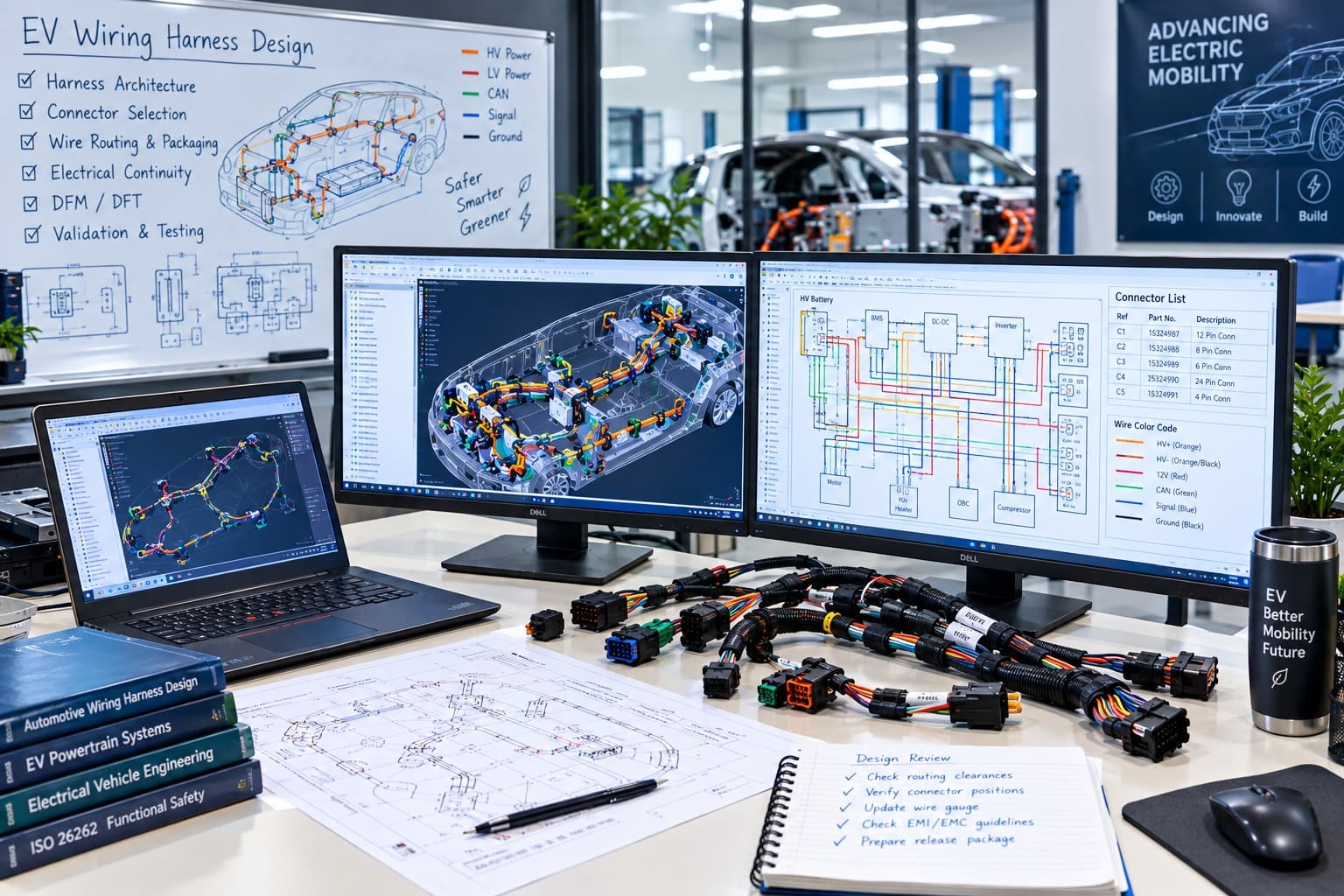
Fill out the form below to start a conversation with us on WhatsApp. Nustech Academy provides an industry-focused EV Course in Pune. The automotive industry is rapidly moving toward electric mobility, creating new opportunities for skilled professionals in the EV sector.
Nustech Academy offer a practical and industry-oriented EV Course for students, diploma holders, engineers, and automotive professionals who want to build expertise in electric vehicle technology. We cover essential areas such as EV batteries, electric motors, powertrain systems, vehicle electronics, controllers, charging technology, diagnostics, and maintenance.
Through structured and application-focused learning, we help learners understand modern EV systems and develop relevant technical skills for the evolving automotive industry.
🎓100% Placement Support
🔧Live Hardware Projects
👨💼Working Industry Experts
💻Online + Classroom
Ready to Start Your Career?
Contact us to learn about upcoming batches, course duration, fees, certification, and enrollment details. Start your journey toward a successful career in automotive wiring harness design and electrical engineering.
Why Choose Nustech Academy for EV Course in Pune?
Learn from industry experience, practical engineering knowledge, and real-world automotive projects. With over 13 years of hands-on experience in the Automotive Wiring Harness industry, Nustech Academy offers career-focused training that bridges the gap between theoretical concepts and real industry practices.
- ✓ 13+ Years of Industry Experience: Learn from extensive experience in automotive wiring harness design, manufacturing engineering, quality systems, and new product development.
- ✓ Real Industry Projects: Understand practical engineering challenges through real-world projects instead of relying only on theoretical concepts.
- ✓ Step-by-Step Learning: Build your knowledge progressively, from fundamental concepts to advanced automotive engineering topics.
- ✓ Practical Engineering Documentation: Learn to create and understand engineering documents used in actual automotive companies, including manufacturing documents and technical specifications.
- ✓ Career-Focused Training: Develop practical skills aligned with industry requirements to improve your job readiness and professional growth.
- ✓ Lifetime Access to Course Updates: Stay up to date with course improvements, updated learning materials, and evolving industry practices.
- ✓ Dedicated Q&A Support: Get guidance and clarification on technical concepts, practical challenges, and course-related questions.
- ✓ Industry Best Practices: Learn workflows and engineering practices followed by OEMs and Tier-1 suppliers, including engineering change management, quality requirements, and production problem-solving.
What Is an EV Course?
An Electric Vehicle Course is a specialized training program designed to introduce learners to the technology, components, electrical systems, and engineering principles used in electric vehicles. It provides a foundation for understanding how electric vehicles operate and how their major electrical and electronic systems work together.
The course can be particularly useful for learners interested in automotive engineering, electrical engineering, vehicle electronics, and the growing electric mobility sector.
EV Engineering Course Syllabus
Explore the advanced EV Engineering Course syllabus at Nustech Academy. Learn electric vehicle architecture, battery systems, HV/LV wiring harness engineering, powertrain systems, communication networks, safety, manufacturing, validation, and practical engineering through a structured 12-chapter curriculum.
COURSE CONTENT
View EV Engineering Course Syllabus
12 ChaptersEV Engineering - Advanced Level
Chapter 1 — EV Fundamentals & Complete EV Electrical Architecture
- EV evolution and fundamentals; BEV, HEV and PHEV overview
- EV energy flow, power flow, control flow and communication flow
- Major EV systems: battery, BMS, BDU/PDU, inverter, motor, OBC, DC/DC and VCU
- HV and LV electrical domains and their interaction
- Basic vehicle electrical architecture and harness interfaces
- ICE vs EV electrical architecture: what changes for the harness engineer
- Industry-oriented EV architecture case study and knowledge assessment
Chapter 2 — EV Battery System & Battery Management System (BMS)
- Cell, module and battery-pack architecture
- Series/parallel configurations and voltage/capacity concepts
- BMS purpose, architecture and key functions
- Cell voltage, temperature and current monitoring
- SOC, SOH and cell balancing fundamentals
- Battery protection, fault detection and communication
- Battery-to-BMS wiring and harness interfaces
- Practical battery/BMS architecture exercise
Chapter 3 — HV Power Distribution: BDU/PDU, Contactors, Pre-charge & HVIL
- HV power distribution architecture
- BDU/PDU functions and typical components
- Main positive/negative contactors
- Pre-charge circuit and why pre-charge is required
- Fuses, service disconnects and HV protection concepts
- HVIL architecture and operating principle
- HV interlock harness, connectors and signal interfaces
- Failure scenarios and diagnostic reasoning
- Conceptual HV power-path mini-project
Chapter 4 — EV Powertrain: Inverter, Motor & Regenerative Braking
- Traction motor types and application overview
- Inverter architecture and DC-to-AC power conversion
- Battery–inverter–motor power flow
- Motor control fundamentals for the harness engineer
- High-current HV connections and phase connections
- Temperature, vibration and routing considerations
- Regenerative braking and energy flow
- Powertrain harness architecture case study
Chapter 5 — OBC, DC/DC Converter & EV Charging Architecture
- On-board charger (OBC) function and architecture
- AC charging energy path
- DC fast charging concept and system interfaces
- DC/DC converter function and LV power generation
- HV-to-LV power architecture
- Charging port, charge controller and communication interfaces
- Charging-related harness and connector considerations
- Charging architecture case study and fault scenarios
Chapter 6 — EV HV & LV Wiring Harness Engineering
- EV harness architecture and harness zoning
- HV vs LV harness requirements
- HV cable construction, insulation and voltage/current considerations
- Wire and cable sizing fundamentals: current, voltage drop and thermal effects
- HV connectors, terminals, seals and interlock interfaces
- Shielded cables, shielding termination and EMC considerations
- Routing, bend radius, abrasion, heat and mechanical protection
- Clips, retainers, grommets and serviceability
- Harness separation, creepage/clearance and isolation considerations
- Practical EV HV/LV harness design project
Chapter 7 — Automotive Communication Networks: LIN, CAN, CAN FD & Ethernet
- Why communication networks are required in EVs
- LIN fundamentals and typical applications
- CAN fundamentals: nodes, bus, arbitration and physical layer concepts
- CAN FD and why it is used
- Automotive Ethernet fundamentals
- ECU, gateway and network architecture
- UDS and DoIP overview
- Communication harness considerations: twisted pair, shielding, topology and EMC
- Network architecture mini-project
Chapter 8 — Automotive E/E Architecture: ECU, Domain & Zonal Architecture
- Evolution from distributed ECU architecture
- ECU roles, gateways and network segmentation
- Domain architecture: body, powertrain, chassis, ADAS and infotainment
- Centralized computing concepts
- Zonal architecture and zone controllers
- Power distribution and communication convergence
- Impact of E/E architecture on wiring-harness topology and complexity
- High-level architecture comparison: conventional vs domain vs zonal
- Complete E/E architecture case study
Chapter 9 — EV Functional Safety & Automotive Cybersecurity Fundamentals
- Why safety and cybersecurity matter in EV E/E systems
- ISO 26262 overview and safety lifecycle
- Hazard Analysis and Risk Assessment (HARA)
- ASIL concept and safety goals
- Functional and technical safety concepts
- Safety mechanisms and safe-state thinking
- ISO/SAE 21434 overview
- Threat Analysis and Risk Assessment (TARA)
- Cybersecurity considerations for ECUs, networks and vehicle interfaces
- Harness engineer's role in safety and cybersecurity requirements
Chapter 10 — EV Harness Design, Manufacturing, Quality & Cost Engineering
- EV harness design workflow from requirements to released drawing
- Connector and terminal selection methodology
- Wire/cable selection and engineering documentation
- 2D drawing, BOM and part-number management
- Manufacturing process: cutting, stripping, crimping, sealing, splicing and testing
- HV termination and controlled manufacturing considerations
- PFMEA/DFMEA interface, control plan and process controls
- Inspection, traceability and end-of-line testing
- Harness costing and cost-breakdown fundamentals
- Design-for-manufacturing and VAVE opportunities
Chapter 11 — EV Validation, Testing, Reliability & Engineering Change
- EV harness validation philosophy and V-model overview
- DV/PV concepts and validation planning
- Continuity, resistance, insulation resistance and hipot concepts
- HV electrical safety testing
- Environmental, thermal, vibration and mechanical tests
- EMC/EMI considerations for HV and communication harnesses
- Connector, terminal and cable validation considerations
- Failure analysis and root-cause thinking
- ECR/ECN and drawing-release process
- Engineering change, validation impact and documentation
- Sample validation plan / DVVP exercise
Chapter 12 — Capstone Project: Complete EV Electrical Architecture & Harness Engineering
- Define a conceptual EV system and engineering assumptions
- Develop complete HV and LV electrical architecture
- Map battery, BMS, BDU/PDU, inverter, motor, OBC, DC/DC and VCU interfaces
- Define CAN/CAN FD/Ethernet communication architecture
- Develop HVIL concept and safety considerations
- Create conceptual HV/LV harness topology and routing strategy
- Select representative wires, cables, terminals and connectors
- Prepare BOM and conceptual 2D harness drawing
- Prepare DFMEA/engineering-risk considerations
- Prepare validation and test plan
- Present and defend the project without script or PPT dependence
- Final technical viva, teaching-style explanation and project assessment
This advanced syllabus combines EV electrical architecture, high-voltage and low-voltage wiring harness engineering, automotive communication, quality, and validation with a capstone project to develop practical, industry-oriented engineering knowledge.
Career Opportunities After an EV Course
Completing an EV Course in Pune can help learners develop technical knowledge relevant to various roles across electric vehicle manufacturing, servicing, diagnostics, testing, and engineering.
- EV Service Technician: Work on inspection, servicing, component checks, and routine maintenance of electric vehicles.
- EV Maintenance Technician: Handle preventive maintenance and technical checks of EV electrical, mechanical, and electronic systems.
- EV Diagnostic Technician: Identify and troubleshoot faults using diagnostic equipment, electrical testing methods, and systematic fault analysis.
- Battery Technician: Work with EV battery packs, battery components, testing procedures, safety practices, and battery management systems.
- EV Design Engineer: Apply EV engineering concepts to support the design and integration of electric vehicle components and systems.
- EV Testing Engineer: Perform component and system-level testing to evaluate EV performance, functionality, reliability, and safety.
- EV System Engineer: Work with multiple vehicle subsystems and support the integration and coordination of electrical, electronic, and mechanical systems.
- EV Powertrain Engineer: Focus on electric motors, inverters, controllers, and other components involved in electric vehicle propulsion.
- EV Charging Technician: Install, inspect, test, and maintain EV charging equipment and related electrical infrastructure.
- EV Electronics Engineer: Work with sensors, controllers, electronic circuits, communication systems, and control units used in electric vehicles.
Who Can Join an EV Course?
An Electric Vehicle Course is suitable for students, diploma holders, engineers, and automotive professionals looking to develop practical knowledge and build a career in the growing electric mobility industry.
- EV Course After 12th: Students can pursue an EV Course After 12th to learn the fundamentals of electric vehicles, including batteries, motors, charging systems, and basic EV architecture.
- EV Course After Diploma: An EV Course After Diploma helps technical diploma holders strengthen their knowledge of EV components, powertrains, battery systems, diagnostics, and maintenance.
- EV Course After Engineering: Engineers can choose an EV Course After Engineering to gain specialized knowledge of electric vehicle technology, power electronics, battery systems, motor technology, and vehicle controls.
- EV Course for Mechanical Engineers: An EV Course for Mechanical Engineers helps professionals apply their mechanical and automotive knowledge to electric powertrains, EV design, battery integration, and vehicle systems.
- Suitable for Technical Professionals: The course can also benefit candidates from automobile, electrical, electronics, mechatronics, and related technical backgrounds who want to upgrade their skills for the EV industry.
Key Areas Covered in EV Training
Our EV Course in Pune provides structured, practical learning across essential electric vehicle technologies, helping learners understand EV components, systems, safety, and their real-world applications.
- Electric Vehicle Fundamentals: Understand the basic architecture, operating principles, and major systems used in modern electric vehicles.
- EV Components: Learn about essential components such as electric motors, batteries, controllers, converters, chargers, and related electrical systems.
- Battery Technology: Gain an understanding of battery construction, battery characteristics, charging concepts, and battery management systems.
- Electric Motors: Explore different motor technologies and understand their role in converting electrical energy into vehicle movement.
- Power Electronics: Learn the basic function of inverters, converters, controllers, and other electronic systems used in electric mobility.
- EV Wiring and Electrical Systems: Understand electrical connections, circuit layouts, harnesses, connectors, and the role of wiring in vehicle functionality.
- Vehicle Electronics: Develop familiarity with electronic control systems and communication between different vehicle components.
- Safety Practices: Learn the importance of electrical safety, proper handling procedures, and systematic working methods while dealing with EV systems.
What You Learn in an EV Course?
An EV Course provides a comprehensive understanding of the key technologies and systems used in modern electric vehicles. The curriculum covers EV architecture, batteries, motors, power electronics, embedded systems, software, and charging infrastructure to build practical knowledge for the electric mobility industry.
1. Electric Vehicle Technology
An Electric Vehicle Technology Course introduces the fundamentals of EV architecture, major components, energy flow, operating principles, safety, and the differences between conventional and electric vehicles.
2. Electric Vehicle Engineering
An Electric Vehicle Engineering Course focuses on vehicle systems, component integration, performance factors, and engineering concepts involved in developing and operating electric vehicles.
3. Battery & Energy Storage Systems
Battery technology is central to EV performance, making battery knowledge an essential part of electric vehicle training.
- Battery Fundamentals: An Electric Vehicle Battery Course covers battery cells, modules, packs, capacity, energy, charging characteristics, and performance.
- Battery Management: A BMS Course for Electric Vehicles covers battery monitoring, protection, cell balancing, temperature management, and state estimation.
- Battery Technology: An EV Battery Technology Course explains battery construction, operation, charging, safety, and energy-storage principles.
4. Electric Motors & Powertrain
Electric motors convert electrical energy into mechanical power and play a key role in EV propulsion systems.
- Motor Fundamentals: An Electric Vehicle Motor Course covers motor types, operating principles, characteristics, control methods, and automotive applications.
- Powertrain Systems: An Electric Vehicle Powertrain Course explains the interaction between the battery, motor, inverter, controller, transmission, and other propulsion components.
- System Integration: Understand energy flow and how different powertrain components work together for efficient vehicle operation.
5. EV Electronics & Control Systems
Modern EVs depend on electronic control systems, sensors, and embedded technologies for efficient and reliable operation.
- EV Electronics: An Electric Vehicle Electronics Course introduces sensors, actuators, electronic circuits, signal processing, and vehicle control applications.
- Controllers: Learn control logic, communication, and system coordination through concepts covered in an Electric Vehicle Controller Course.
- Inverters: Understand how inverters control and convert electrical power for the traction motor.
- Embedded Systems: An Electric Vehicle Embedded Systems Course introduces embedded controllers, automotive interfaces, sensors, communication protocols, and real-time systems.
- Software: An Electric Vehicle Software Course provides an overview of software used for vehicle control and electronic system management.
6. EV Charging Technology
Charging is an essential part of the electric mobility ecosystem, connecting the vehicle, battery, and charging infrastructure.
- Charging Fundamentals: An Electric Vehicle Charging Course covers charging methods, electrical requirements, safety practices, and charging communication.
- AC & DC Charging: Understand the principles and applications of AC and DC charging for different EV use cases.
- Charging Stations: An EV Charging Station Course introduces charging-station components, operation, installation considerations, and safety requirements.
- Charging Systems: Learn how charging equipment communicates and interacts with the vehicle and battery during the charging process.
EV Design, Maintenance and Repair
Electric vehicle careers require knowledge beyond individual components because technicians and engineers must understand how complete systems operate together.
An Electric Vehicle Design Course introduces fundamental concepts related to EV system architecture, component selection, integration, and design considerations.
For service-oriented applications:
- Maintenance Skills: An Electric Vehicle Maintenance Course helps learners understand inspection, preventive maintenance, system checks, and EV-specific service practices.
- Repair Fundamentals: An Electric Vehicle Repair Course introduces systematic troubleshooting and repair considerations for electrical, electronic, battery, and propulsion systems.
- Hands-On Understanding: Practical learning helps students connect classroom concepts with real automotive applications.
Benefits of Learning EV Technology
An EV-focused technical program can help learners build specialized knowledge and prepare for opportunities within the rapidly evolving electric mobility sector.
- Industry-Relevant Skills: Develop knowledge of EV batteries, motors, power electronics, charging systems, electronics, and vehicle architecture.
- Practical Technical Exposure: Strengthen your understanding by connecting theoretical concepts with real-world EV components and applications.
- Career-Oriented Learning: Build a technical foundation relevant to EV service, diagnostics, testing, design, maintenance, and engineering roles.
- Multiple Career Pathways: Explore opportunities across vehicle manufacturing, automotive service, battery technology, charging infrastructure, and EV engineering.
- Future-Focused Knowledge: Stay updated with technologies that are becoming increasingly important in the automotive and electric mobility industry.
- Skill Enhancement: Add specialized EV expertise to an existing mechanical, electrical, electronics, automobile, or engineering qualification.
- Professional Development: Strengthen your technical profile with structured learning that can complement your academic or professional background.
Enroll Today at Nustech Academy
Nustech Academy offers a comprehensive EV Course in Pune. As electric mobility continues to reshape the automotive industry, developing specialized EV skills can help learners stay prepared for emerging technical opportunities. We help students and professionals build practical knowledge through our EV Course, covering important areas such as battery technology, electric motors, powertrains, electronics, charging systems, diagnostics, and maintenance. Our industry-focused approach enables learners to strengthen their technical capabilities and build a solid foundation for a career in the growing electric vehicle sector. Reach out to us for additional details.
FAQ’s
1. Who can join an EV Course?▼
Students, diploma holders, engineers, and automotive professionals can pursue an EV Course to develop specialized electric vehicle skills. The course can be suitable for learners from mechanical, automobile, electrical, electronics, and related backgrounds.
2. What topics are covered in an EV Course?▼
The curriculum generally covers EV architecture, battery systems, BMS, motors, power electronics, controllers, charging systems, diagnostics, and maintenance. Learners gain an overall understanding of how major electric vehicle systems operate and interact.
3. Can mechanical engineers join an EV Course?▼
Yes, mechanical engineers can use an EV Course to expand their knowledge into electric powertrains, vehicle systems, battery integration, and EV technology. The training can complement their existing mechanical and automotive engineering knowledge.
4. Is practical training included in an EV Course?▼
Practical training can help learners connect EV concepts with real components, systems, testing, diagnostics, and applications. The specific practical modules depend on the course structure and training program offered by the institute.
5. What is the difference between an EV Course and an Electric Vehicle Engineering Course?▼
An EV Course generally provides broad knowledge of electric vehicle technologies and systems. An Electric Vehicle Engineering Course can offer deeper engineering-oriented learning related to design, integration, development, and system performance.
6. How can I start a career in EV?▼
You can start by learning EV fundamentals and developing practical skills in batteries, motors, electronics, diagnostics, and charging systems. An industry-focused EV Course can provide a strong foundation for entering the electric mobility sector.
7. What are the fees for EV courses in Pune?▼
EV Course fees in Pune vary based on course duration, curriculum, practical training, and certification included in the program. For the latest fee structure at Nustech Academy, we recommend contacting our team for current course details.


